About Recovered Acetic Acid
We are interested in regularly buying Recovered Acetic Acid in bulk quantities. Our monthly requirement of Recovered Acetic Acid is more than 100 MT. We have been regularly buying Recovered Acetic Acid since last more than 30 years. We possess excellent knowledge in handling and managing Recovered Acetic Acid. We have thorough expertise in logistics and supply chain management of Recovered Acetic Acid. We have been pioneers in chemistry of Recovered Acetic Acid and have detailed know how about carrying out fractional distillation of Recovered Acetic Acid. We have experienced dedicated team of research scientists, production & quality control for proper management of Recovered Acetic Acid.
Versatile Industrial ApplicationsRecovered Acetic Acid is an invaluable reagent for numerous industries, including textiles, pharmaceuticals, chemicals, leather, rubber, and dyes. Its high purity makes it effective as a solvent, pH regulator, and raw material. Its miscibility with water allows for flexible integration into manufacturing processes, helping manufacturers achieve consistent, quality-driven outcomes.
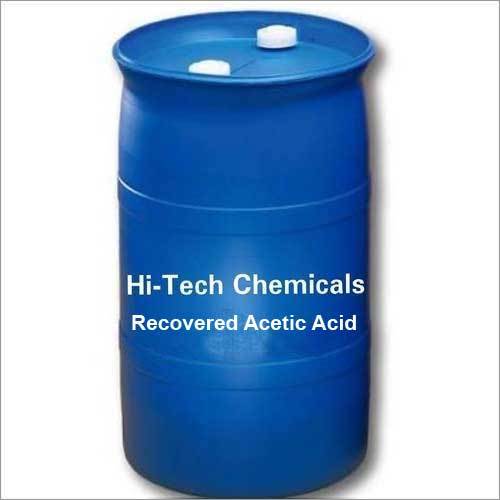
Safe Storage and Handling PracticesThis chemical must be stored in a cool, dry, and well-ventilated area, away from heat sources and incompatible materials. Ensure proper labeling and use only approved plastic drums or tanker loads to maintain safety and prolong shelf life. As a corrosive (Hazard Class 8), handlers should use adequate personal protective equipment and adhere to standard industry safety procedures.
FAQ's of Recovered Acetic Acid:
Q: How should Recovered Acetic Acid be stored to maintain its stability and effectiveness?
A: Recovered Acetic Acid should be stored in a cool, dry, and well-ventilated location, away from heat or ignition sources. It must be kept in properly sealed plastic drums or tanker loads, and all containers should be clearly labeled to prevent mishandling. Adherence to these guidelines ensures the product's stability and extends its shelf life.
Q: What are the primary industrial uses of Recovered Acetic Acid?
A: This acid serves as a fundamental component in textile processing, pharmaceutical synthesis, chemical manufacturing, leather tanning, rubber processing, and dye production. Its high purity and miscibility with water enable it to act effectively as a solvent, reagent, and pH adjuster in various large-scale processes.
Q: When should Recovered Acetic Acid be used before it expires?
A: It should be used within 12 months from the date of manufacturing to ensure optimal performance. Proper storage conditions can help maintain its quality for up to one year, as specified by the supplier.
Q: Where is Recovered Acetic Acid typically supplied from and what packaging types are available?
A: This product is commonly manufactured, exported, and supplied in India. It is usually packaged in robust plastic drums or delivered via tanker loads, ensuring safe and convenient handling for industrial users.
Q: What processes are used to produce Recovered Acetic Acid, and how does its origin affect its application?
A: Recovered Acetic Acid is obtained as a byproduct from chemical waste streams through distillation. This recovery process produces a highly pure acid suitable for demanding industrial applications, promoting efficient resource utilization and environmental sustainability.
Q: How is Recovered Acetic Acid applied during manufacturing or processing?
A: Application methods depend on the specific manufacturing requirements. It should be added according to standard industry practices and guidelines, with process engineers determining appropriate concentrations and integration points to achieve desired results safely and efficiently.
Q: What benefits does Recovered Acetic Acid offer compared to newly synthesized acetic acid?
A: Utilizing recovered acetic acid supports sustainability by reusing materials from chemical waste streams. It offers cost-effectiveness while maintaining high purity and performance, making it suitable for critical industrial applications with reduced environmental impact.



 Send Inquiry



 Send Inquiry



