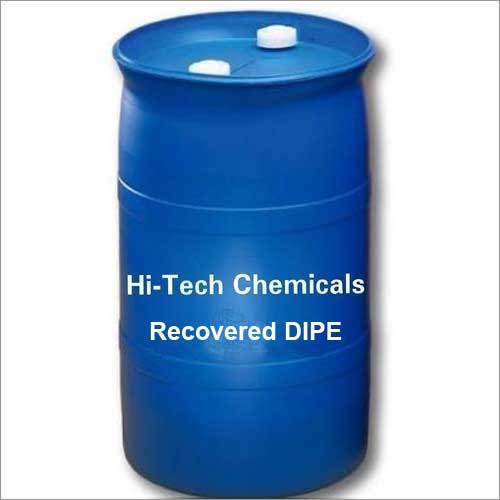
About Recovered DIPE
We are interested in regularly buying Recovered DIPE in bulk quantities. Our monthly requirement of Recovered DIPE is more than 100 MT. We have been regularly buying Recovered DIPE since last more than 30 years. We possess excellent knowledge in handling and managing Recovered DIPE. We have thorough expertise in logistics and supply chain management of Recovered DIPE. We have been pioneers in chemistry of Recovered DIPE and have detailed know how about carrying out fractional distillation of Recovered DIPE. We have experienced dedicated team of research scientists, production & quality control for proper management of Recovered DIPE.
Key Properties & ApplicationsRecovered DIPE is highly regarded for its excellent solvency, neutral pH, and compatibility with organic solvents, making it an ideal choice for the pharmaceutical industry, chemical manufacturing, and use as a fuel additive. Its relatively low boiling point facilitates easy separation in chemical processes, while its clear, colorless appearance and distinctive odour ensure easy identification during industrial use.
Safe Handling & Storage GuidanceAs a highly flammable ether, proper storage of Recovered DIPE is essential. Keep tightly sealed in a cool, dry, well-ventilated area, away from heat and ignition sources. Use personal protective equipment to minimize inhalation and direct contact. Adhering to these safety instructions ensures stable storage, preserving the solvent's effectiveness throughout its 2-5 year shelf life.
FAQ's of Recovered DIPE:
Q: How should Recovered DIPE be handled safely during use and storage?
A: Recovered DIPE is highly flammable and volatile. It should be handled in well-ventilated areas, away from heat, sparks, and open flames. Always use appropriate personal protective equipment, such as gloves and eye protection. Store it tightly sealed in cool, dry, and ventilated spaces, preferably in metal drums or ISO tanks, to maintain stability and minimize hazards.
Q: What are the main industrial applications of Recovered DIPE?
A: Recovered DIPE is primarily used as a solvent in pharmaceutical manufacturing, in chemical synthesis as a process solvent, and as an additive in fuels. Its high solvency power and compatibility with organic compounds make it valuable in these sectors for efficient processing and formulation.
Q: When is Recovered DIPE considered expired or past its best use period?
A: Recovered DIPE offers a shelf life of 2-5 years if stored under recommended conditions-sealed, in cool and dry surroundings. It is best used within this period to ensure maximum efficiency and meet quality requirements. Deterioration may occur if exposed to improper storage or if the packaging is compromised.
Q: Where is Recovered DIPE manufactured and exported from?
A: Recovered DIPE is produced and exported from India, with availability for global markets. The product is shipped in metal drums, ISO tanks, or custom packaging, adhering to international transport regulations (UN 1159, Class 3, Packing Group II).
Q: What impurities may be present in Recovered DIPE, and how does this affect its applications?
A: Recovered DIPE may contain minor traces of isopropanol and water, originating from the byproduct recovery process. These impurities are within acceptable limits for technical grade applications and do not significantly affect its performance as a process solvent in industrial settings.
Q: How does using Recovered DIPE benefit industrial operations?
A: Using Recovered DIPE as a process solvent or fuel additive offers excellent solvency, efficient separation due to its low boiling point, and consistent performance because of high purity. Additionally, sourcing this solvent from IPA byproduct recovery promotes resource efficiency and cost-effectiveness for manufacturers.
Q: What is the process for obtaining Recovered DIPE?
A: Recovered DIPE is produced via the recovery and purification of byproduct streams from isopropanol (IPA) manufacturing. This process involves distillation and purification steps to meet the required purity (99%) for technical-grade applications.



 Send Inquiry



 Send Inquiry



